Hospitality Tableware Brief Revisions: Keep the Current Request Easy to Identify
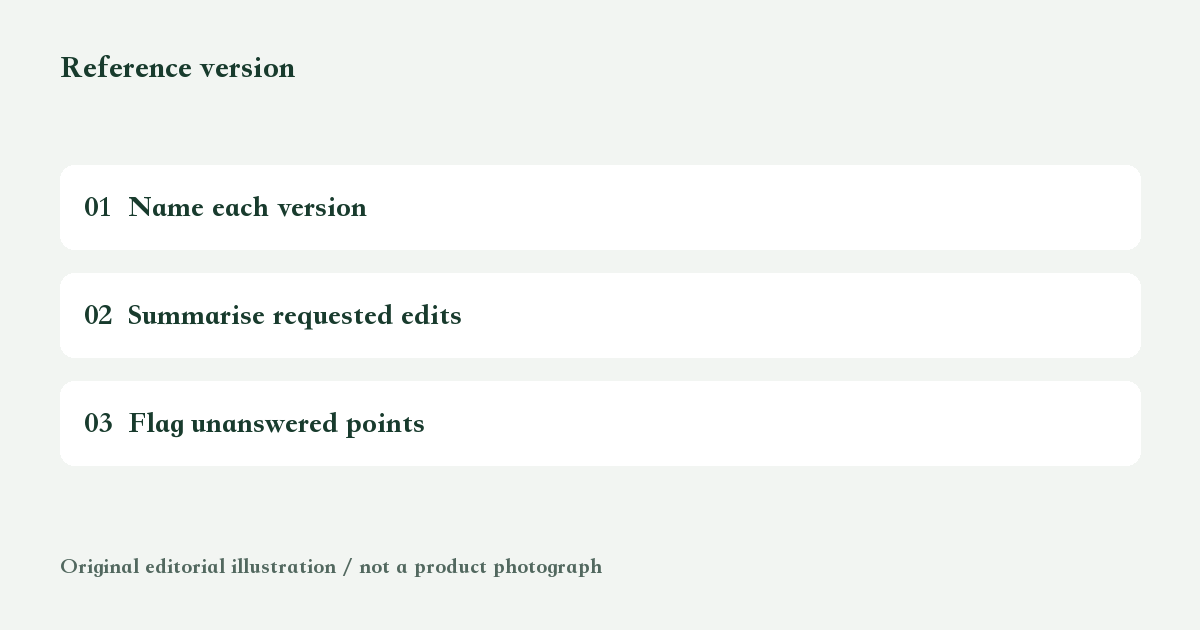
A hospitality tableware brief can change as a project develops. To keep the current request identifiable, give each working copy a clear version label
A hospitality tableware brief can change as a project develops. To keep the current request identifiable, give each working copy a clear version label and record the date it was updated. A version label is a filing aid; it does not mean that the content has been approved or that every recipient has reviewed it.
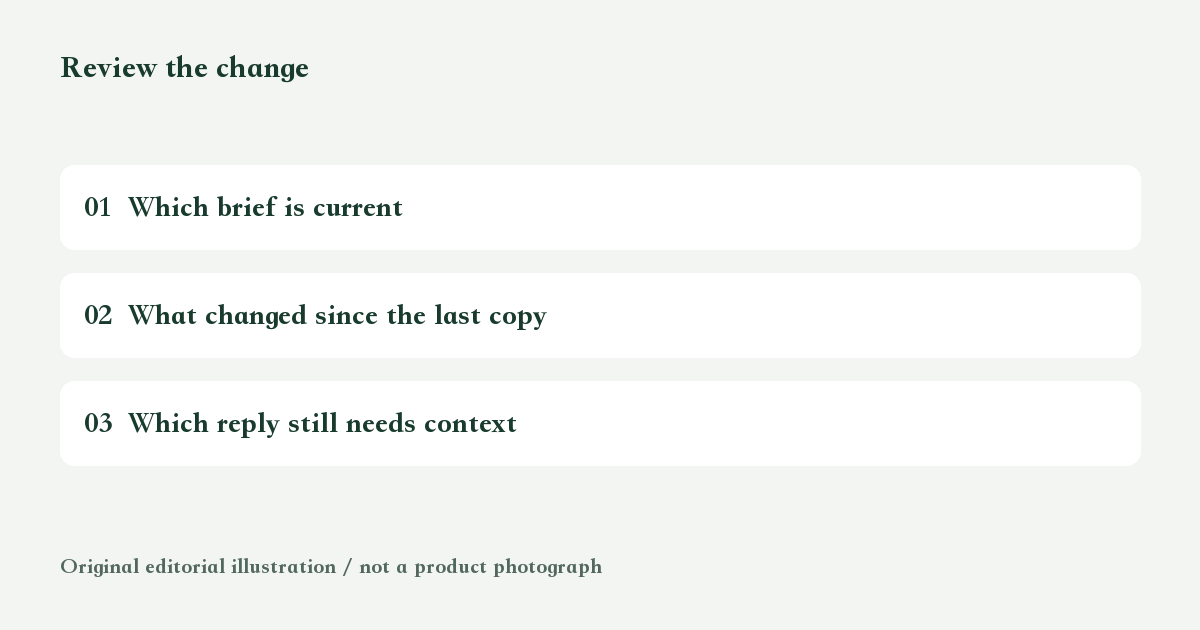
At the top of the current brief, summarise the purpose of this copy and identify the previous version it replaces for discussion. Keep earlier copies in a clearly marked archive so a reader can understand how a question changed. Avoid vague filenames such as “final” when another revision may still be needed.
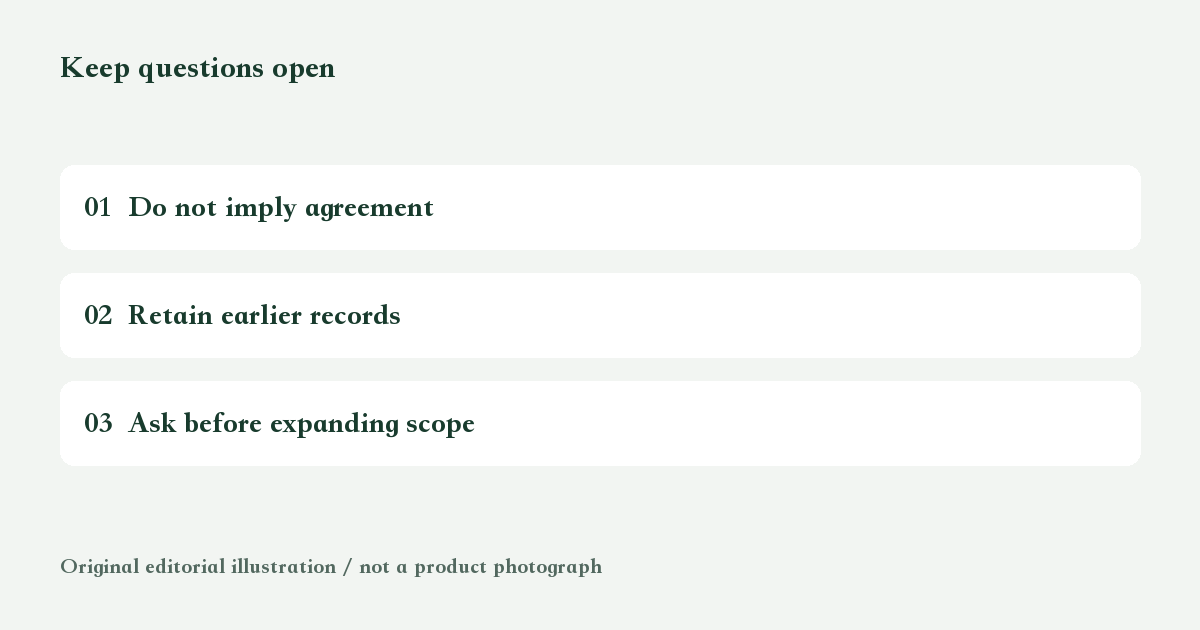
Describe changes as requests, decisions or questions, according to what the correspondence supports. For example, a team member may request a different shape or ask where decoration should appear; that wording should remain a request until the appropriate participants confirm it. Do not rewrite unanswered items as settled requirements.
A short change list can point to the relevant section without repeating the entire brief. Note whether a change affects a reference image, a piece list or the wording of an enquiry. If those related materials have not been updated, leave a visible reminder so the next reader knows what still needs review.
When comments arrive from several people, preserve the source and date of each comment. Group similar points for easier reading, but do not merge different preferences into one statement of consensus. If views conflict, show the open alternatives and identify who needs to decide or respond.
Before sending the next copy, check that its title, attachment names and summary refer to the same version. Remove personal details or unrelated commercial notes that are not needed by recipients. Keep confirmed information distinguishable from proposed edits and unresolved questions.
This version map is a document organisation method for tableware sourcing enquiries. It does not confirm an order, supplier agreement, production status, product specification or schedule. It records only the changes and replies actually available for review; any wider conclusion needs separate confirmation.
Image note: Three original editorial illustrations, not product or site photographs.